Democratizing the ISA: Why SOA's Presence in Deep-Sea Governance Matters
Sustainable Ocean Alliance has maintained a constant presence at the International Seabed Authority (ISA) since 2022, attending 10/10 Meetings of the Council and Assembly
Jun 19, 2026
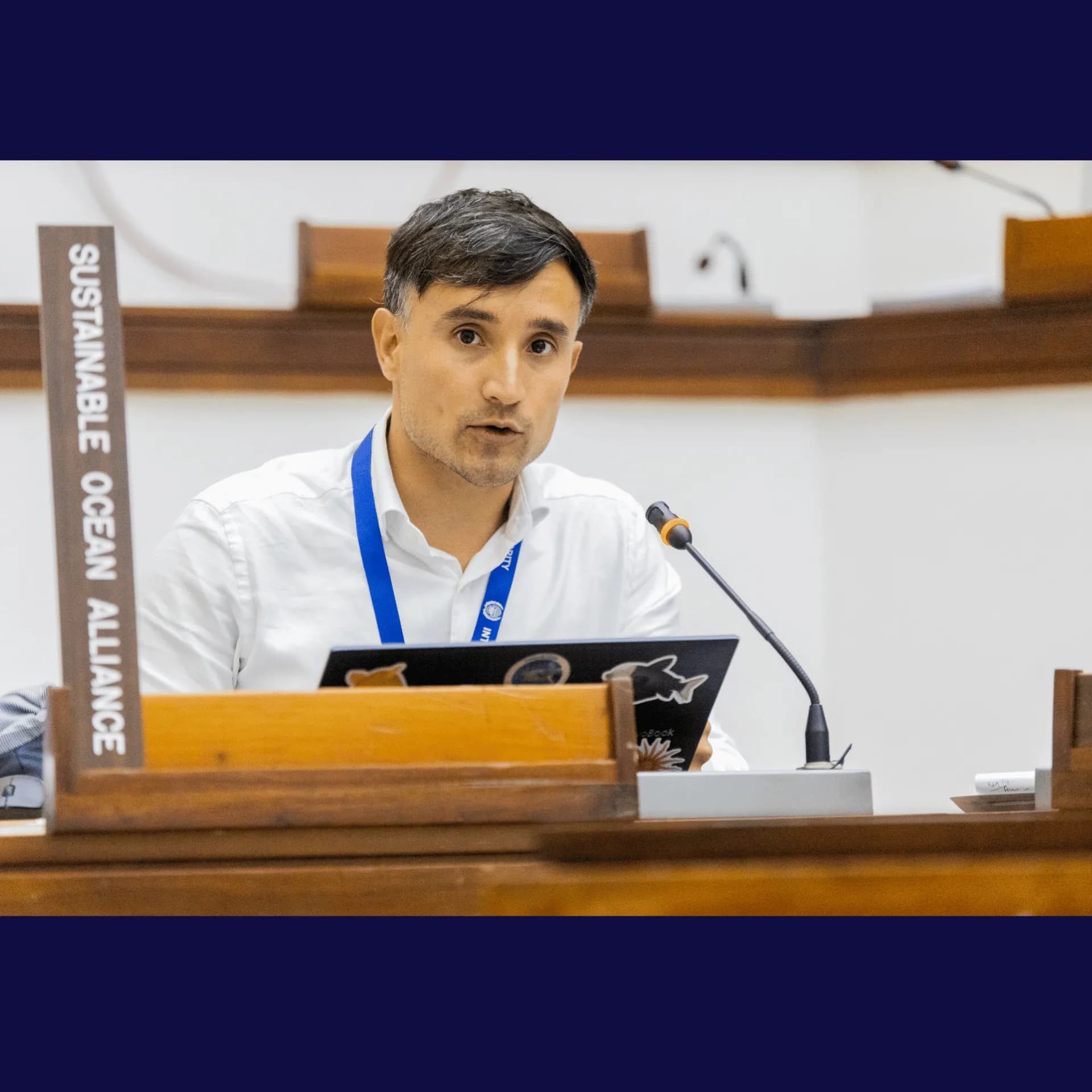
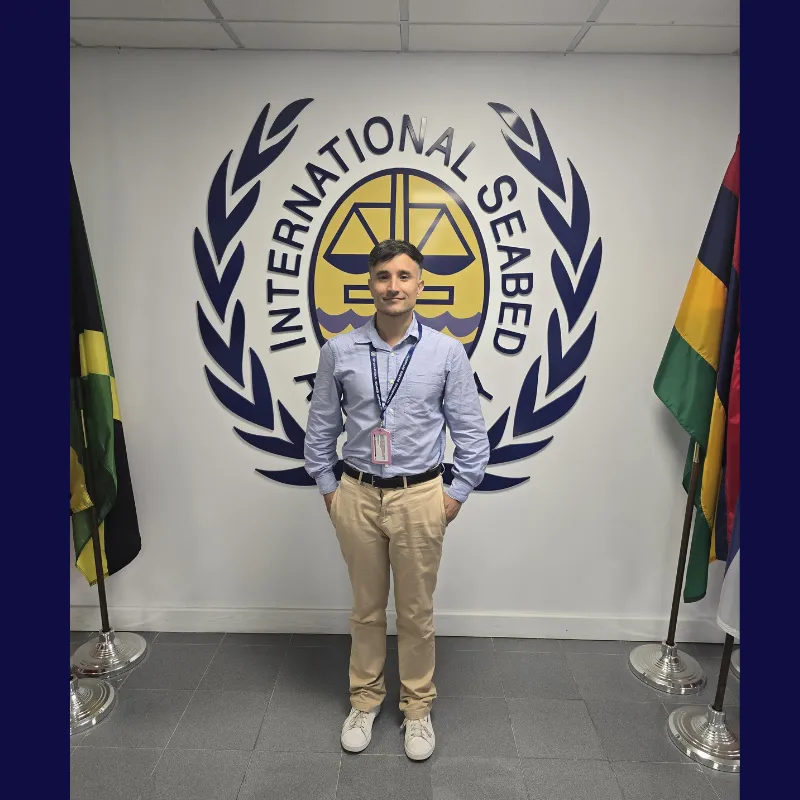
For the past four years, Sustainable Ocean Alliance has maintained a constant presence at the International Seabed Authority (ISA), one of the most important and least publicly understood ocean governance spaces in the world.
Since becoming the first youth organization to be accredited with observer status, SOA has participated in both the Council and the Assembly, attending more than ten meetings and not missing a single session since 2022. We will participate again in the Council and Assembley meetings at the end of July 2026. That continuity is intentional. It reflects a long-term strategy rooted in three goals: building expertise, representing unheard voices, and democratizing access to a space where decisions of global consequence are being made.
The ISA is an international organization governing the mineral-resources-related activities and the protection of the marine environment in areas beyond national jurisdiction, constituting 54% of the total ocean area. It is based in Kingston, Jamaica and has 171 member states and the European Union. The ISA assembly includes all members' and has the power to establish general policies to protect the environment from the impacts of mining. However, the ISA council, the governmental second body, is limited to 36 elected members and has control over implementation. It is tasked with the creation and enforcement of policies and regulations under the UN Convention on the Law of the Sea (UNCLOS) for deep-sea mineral prospecting, exploration, and exploitation—overseeing contract approvals and setting environmental standards. These negotiations in both governmental bodies delve into biodiversity, equity, environmental harm, economic justice, global governance, and the rights of future generations. The outcomes will shape how humanity governs one of the most consequential and least understood ecosystems on our planet.
That is why SOA is there. And that is why our presence matters.
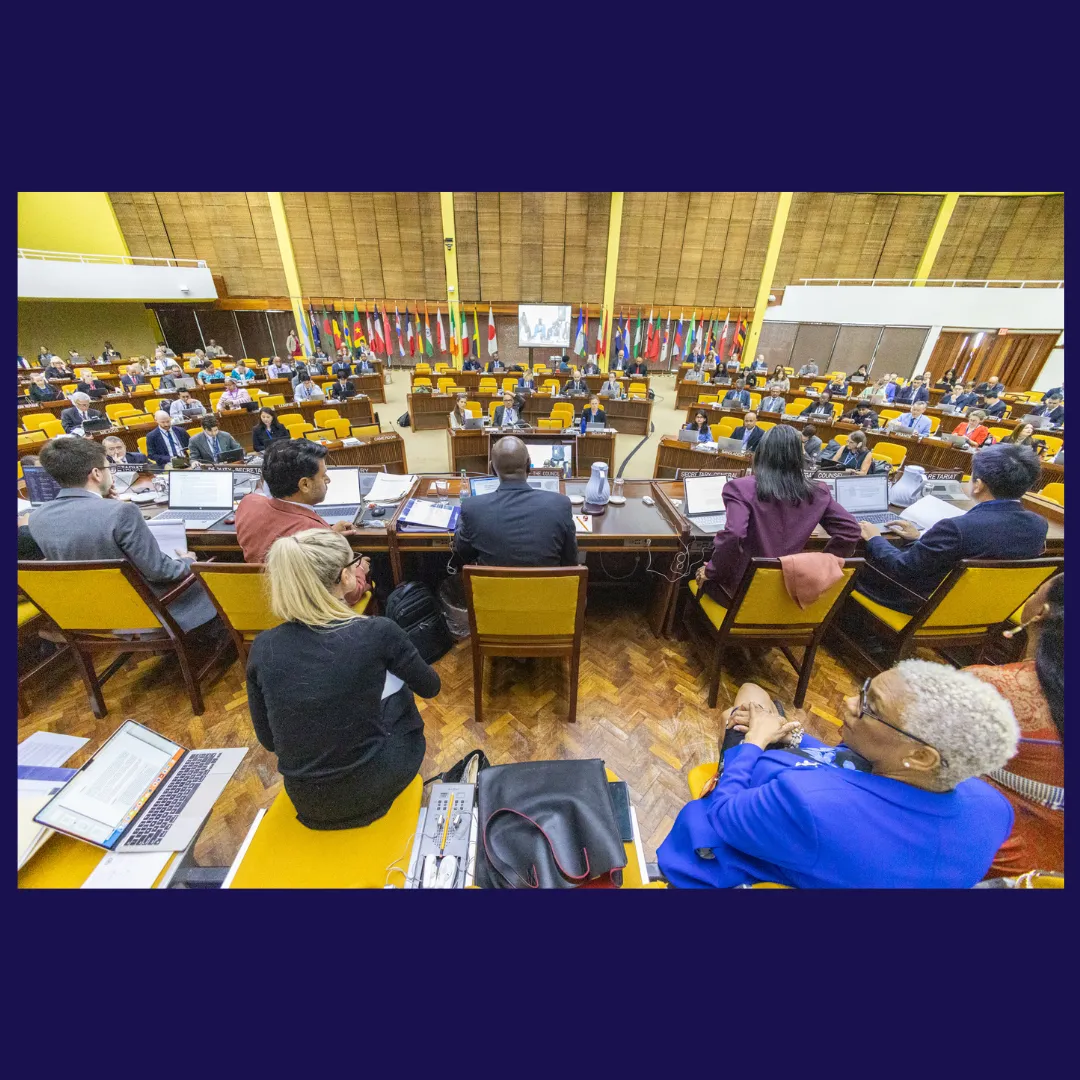
1. Building expertise that serves movements, not just institutions
Too many of the communities most likely to be affected by deep-sea mining are not consistently present in these negotiations. This includes parts of Latin America, Africa, Asia, and many countries whose diplomatic or institutional access to these spaces remains limited. Yet these are also the regions where informed youth leadership can be especially catalytic, as the consequences of today’s ocean governance decisions will be carried far into the future.
By showing up consistently, SOA is helping build something still far too rare in ocean governance: expertise that serves movements.
Since 2022, we have not missed a single ISA session. That continuity has allowed us to build a real understanding not only of the legal text, but of the politics behind it, where pressure comes from, what narratives are gaining traction, where alliances are shifting, and how technical issues can become strategic turning points. It has also allowed SOA to build long-term relationships in the room with key actors across regions and sectors, something that matters deeply in a space where trust, familiarity, and continuity shape how conversations move.
That expertise is not being built for its own sake. We use it for our community: to inform regional understanding, strengthen our communications, support young leaders through deep-sea mining-related grants, and translate what is happening at the ISA into accessible insights through social media and live updates. This matters even more because SOA’s community spans more than 50 countries, including national networks where many young people, and often even governments, have barely heard of the ISA, despite how important its decisions may become for their future. Deep sea mining is an incredibly expensive process, and few countries have the technical capability and resources to undertake it. However, the consequences to ocean health have harmful impacts that extend far beyond the countries benefiting from extraction, threatening the health and livelihood of the entire ocean, the planet, and all those who depend on it.
We believe expertise should not remain only in the hands of institutions that have historically dominated these rooms. It also needs to be built within youth movements, civic networks, and regional communities that are too often expected to react to global decisions without ever being equipped to shape them
2. Representing communities and generations too often missing from the room
SOA’s role at the ISA is also deeply representative.
We bring the perspective of young leaders into a space where youth are still far from meaningfully embedded. But our role goes beyond youth representation in the present. We also bring an explicitly intergenerational perspective to a process whose consequences may last for centuries.
SOA is one of the few organizations consistently present in the room speaking from that horizon. We believe future generations deserve an ocean capable of providing the same integrity, stability, and life-supporting services that the ocean has already provided to all of us.
On July 25, 2023, SOA became the first youth-led organization to receive official Observer Status at the ISA, joining 44 other Observer NGOs. Observer Status means that SOA is now able to formally speak on behalf of our stakeholders, deliver interventions, and increase the size and presence of our youth delegation at the ISA during these critical discussions about deep-sea mining. Up until that point, SOA was only able to observe silently, or speak and deliver interventions through our partners like Deep Sea Conservation Coalition who already obtained Observer Status at the ISA.
SOA has used this privilege to bring into the conversation the concerns of communities and countries that are too often sidelined in these negotiations, including small states, landlocked states, regions with limited negotiating presence, and economies that could be deeply affected by deep-sea mining even if they are not leading the debate.
Representation at the ISA cannot only be about those who have the resources to be physically present. It also has to be about whose realities, whose interests, and whose futures are being taken seriously.
3. Democratizing a global arena that should belong to everyone
The third pillar of SOA’s strategy at the ISA is democratization.
We firmly believe that what happens at the ISA should not remain trapped inside negotiation rooms, diplomatic summaries, and technical documents. The mandate of the ISA is to protect the deep sea bed for the “benefit of humankind as a whole”. In order to achieve this widespread benefit, the conversation around the future of the global ocean cannot be limited to insiders.
That is why SOA has prioritized live, accessible communication from the negotiations.
We believe in explaining what is happening while it is happening, not only to our own network of young leaders, but to anyone who wants to understand what is unfolding in one of the world’s most important ocean policy spaces. We translate key developments, explain why certain debates matter, identify emerging political dynamics, and make visible the stakes behind complex procedural language.
Additionally, SOA has created a free online ocean advocacy training course called the Deep Sea Academy. This course is taught by world-class experts and those on the frontlines standing against deep-sea mining and includes case studies and training exercises covering coalition building, grassroots campaigning, policy advocacy and more. The education provided by this course is part of SOA’s effort to democratize understanding and thus access to the conversation around deep sea mining and our ocean as the “common heritage of humankind.”
We believe the ISA should be treated as a true public arena. In many ways, what happens there should be followed with the seriousness of a major global event, because the outcomes will influence all of us. The decisions being shaped are not abstract. They concern ecosystems, economies, climate, equity, and the boundaries of acceptable risk for the planet.
By sharing negotiations in real time and providing foundational education around this conversation, SOA is helping open this space up. We are making the ISA less opaque, less distant, and less exclusive.
What makes SOA’s role different
Many organizations attend global forums. Fewer stay long enough to build real expertise. Fewer still combine that expertise with regional sensitivity, intergenerational framing, and public-facing communication.
Follow the negotiations with us
At SOA, we believe that people should not have to wait for the end of a negotiation to learn what was at stake. They should be able to follow the process while it unfolds.
That is why, alongside our formal participation, we have created a live WhatsApp update space where we share developments, reflections, and insights from the ISA in real time.
If you would like to follow the negotiations more closely and stay connected as we move toward the second part of the Council session and the Assembly in July, you can join our WhatsApp group.