Why we invested in DisperseBio: Anemone-inspired anti-biofouling solutions
Feb 05, 2026
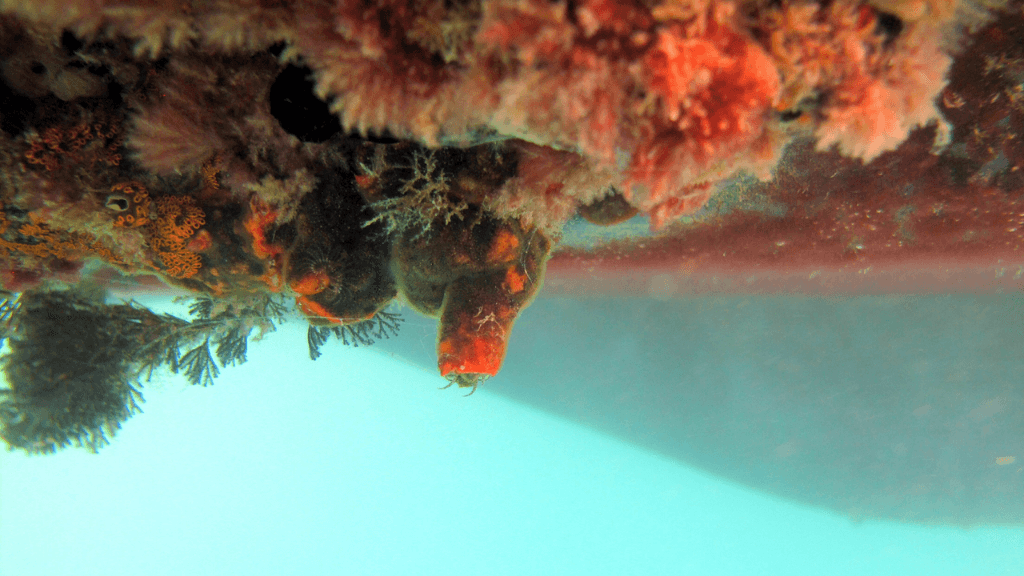
Biofouling on a ship’s hull increases drag, fuel consumption, and maintenance costs, and current anti-fouling techniques release harmful chemicals into marine environments. (Photo credits: Smithsonian Environmental Research Center)
By: Alicia Hernández, SOA Investment Associate, and Matt Mulrennan, SOA Head of Investments.
Anti-biofouling chemicals are a growing threat to Ocean Health
Every day, ships, desalination plants, and water infrastructure systems operate in constant contact with seawater. What most people never see is the microscopic battle happening on every surface: biofouling.
Biofouling is when slimy layers of microbes build up on ship hulls, desalination membranes, and pipes. It costs industry over $100B a year because it makes systems less efficient and more expensive to run. For ships, this buildup makes hulls rougher, creating more drag, so vessels burn more fuel to travel at the same speed. For desalination and water treatment, biofilms clog and strain equipment, increasing energy use, shortening membrane life, and requiring more frequent chemical cleaning and downtime.
The industry’s response for decades has been blunt force: toxic biocides. These chemicals are released directly into marine environments at massive scale, millions of tons per year globally, and are orders of magnitude more harmful to marine life than oil spills. They accumulate in enclosed ports and harbors, shipping lanes, and most places where there is underwater infrastructure. As regulation tightens and environmental scrutiny grows, the status quo is becoming untenable.
At Sustainable Ocean Alliance (SOA), we believe ocean solutions must protect both operational performance and ecosystem health, while showing economical scalability. That’s why we’re proud to invest in DisperseBio’s seed round alongside leading climate, water, and ocean health investors, including Twynam, SOSV (IndieBio), Peak Ventures, Foxglove, and the Israel National Center of Blue Economy. DisperseBio, a Haifa, Israel–based company, is rethinking biofouling control by learning from nature itself: shifting the industry from killing microbes with toxic chemicals to preventing biofilms through non-toxic bio-signaling.
Why killing microbes is not the best approach
Most antifouling technologies are built on a single assumption: microbes must be killed.
But killing microbes comes with steep costs. Toxic biocides harm non-target species as they accumulate in marine ecosystems, microplastics along with the biocides can be released during hull cleaning accumulating in sediment in enclosed harbors, and this all creates regulatory and reputational risk for operators. Worse, the technique can drive microbial resistance, forcing ever-higher doses and escalating chemical use over time.
Nature, however, takes a different approach.
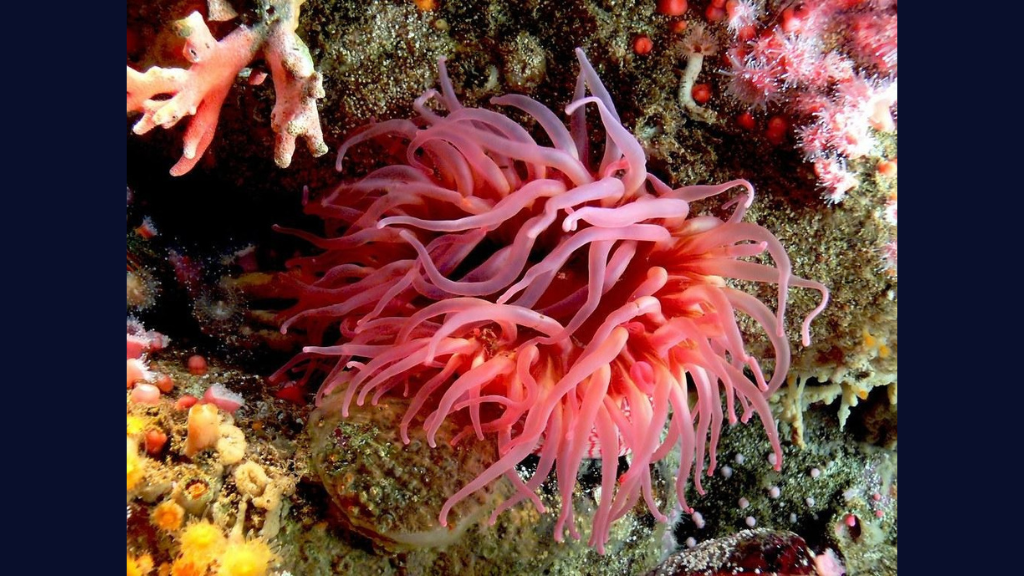
Many marine organisms, such as sea anemones and dolphins, remain remarkably free of biofilms without poisoning their surroundings. They don’t kill microbes. Instead, they prevent microbes from settling and multiplying in the first place.
DisperseBio asked a deceptively simple question: What if industry followed nature’s rulebook instead of fighting it?
DisperseBio stops microbial growth using the power of evolution
DisperseBio makes peptides that interfere with the attachment of microbes and this helps stop biofouling without toxic biocides. The peptides can be used as a coating additive, mixed into paints, or developed as a cleaning agent, so they fit into existing workflows across shipping, desalination, and water infrastructure.
A few things stand out about the platform: non-toxic and ocean-safe therefore easier to regulate, it works at very small doses (for example, 18 grams can protect the hull of an entire bulker ship), and it’s backed by millions in R&D and IP, including five granted patent families.
Early pilot results show real-world promise:
- Reverse osmosis desalination membranes showed a 90% reduction in biofilm quantity and a 78% annual reduction in biofilm-related costs, driven by lower energy use and less chemical cleaning.
- Drip irrigation systems using recycled water showed no biofilm formation over 30 days with peptide coatings, replacing weekly chlorine treatments.
- Across pilots, operators reported less downtime, lower chemical use, and better efficiency, a straightforward win for ocean health and for customers’ operating costs.
_________________
Why we invested
Our decision to invest in DisperseBio comes down to a few core reasons that align with SOA’s mission to advance ocean impact innovations:
1. Meaningful ocean health impact that’s scalable:
Biofouling today is managed largely with toxic biocides released directly into marine environments alongside expensive physical cleaning. 2 Advil-sized tablets of DisperseBio peptides could cover a whole ship hull to prevent fouling.
2. Deep, defensible IP and years of R&D:
This is not a commodity coating story. DisperseBio has built a durable moat around a novel mechanism, supported by significant R&D and multiple granted patent families.
3. Biomimicry with rigor, not marketing:
The approach is grounded in a specific natural mechanism (e.g., anemone-inspired anti-biofilm behavior) and translated into an industrial product designed for real-world constraints.
4. Near-term adoption without forcing infrastructure change:
By fitting into existing workflows as a coating additive or cleaning agent, the platform can be adopted without major retrofits or behavior shifts, which is critical for fast scaling.
5. Large markets with growing regulatory pressure:
From shipping to desalination to water infrastructure, biofouling is a $100B+ problem from lost efficiencies, wasted membranes, and extensive cleaning, and tightening rules around chemical discharge is making non-toxic solutions increasingly necessary.
We’re excited to partner with DisperseBio because they are proving that protecting ocean health and improving industrial efficiency can have the same outcome, and that the best blueprint for solving ocean challenges may already exist in the ocean itself.
RELATED: Watch DisperseBio’s pitch at the SOA Ecopreneur Network Demo Day 2026 here.
Our vision: Letting natural solutions inspire industrial design
The ocean has spent billions of years solving problems that industry is only beginning to understand. DisperseBio reminds us that the most powerful innovations don’t always come from more force, more chemicals, or more complexity, but from learning how nature adapts for challenging environments.
SOA and Seabird Ventures are proud to support DisperseBio with investment and as a new member of the SOA Ecopreneur Network. By replacing toxic biocides with nature-inspired dispersal mechanisms, DisperseBio offers a future where industrial efficiency and ocean health are not at odds.